
Product Grouping in Retail: When Segmentation Becomes Experience
A smart retail layout does more than displaying stock. It translates the customer triggers into decision-making strategy and spatial logic. IKEA’s candle shop concept is a powerful example of how grouping by scent, colour, and price progression can turn a simple category like candles into a memorable in-store journey.
Product grouping is not simply about order.
It is about decision architecture.
At surface level, it may seem quite operational: placing similar items together, organising by usage type, gender, category, colour, price, the list never ends. But the reality is far more strategic, and in th eend it can feel like a puzzle where every inch blend together for a overall navigation plan.
The best retailers understand that grouping is not a storage logic. It is a customer-thinking logic translated into space.
The way products are allocated and clustered in the physical space directly shapes how customers navigate, how they compare options, how they build desire, and ultimately how easily they move toward a purchase.
A recent IKEA “Candle Shop” concept offers a perfect example of how grouping can elevate a simple category into a memorable retail journey.
The Macro Level: Defining a atmosphere Within the Store
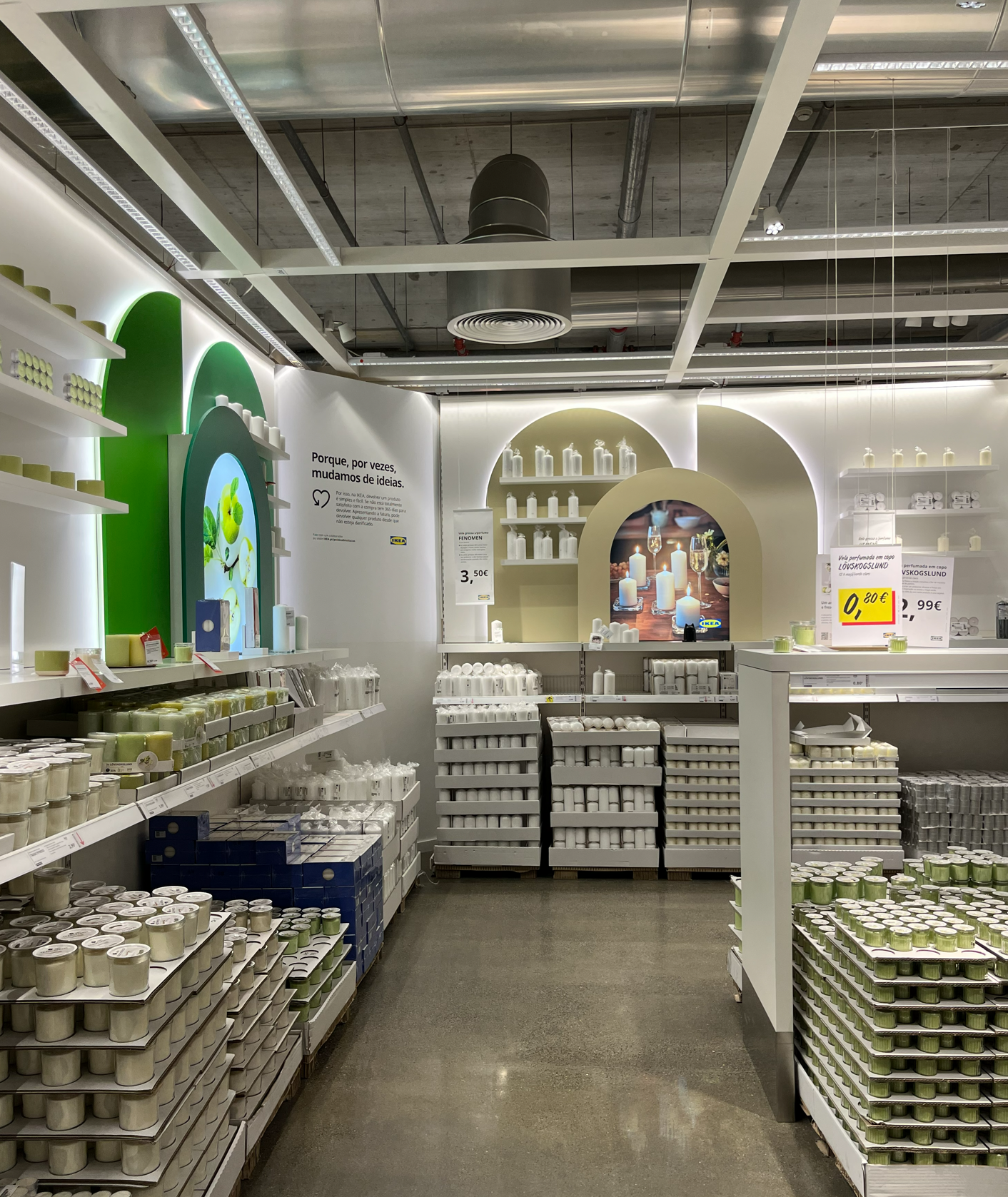
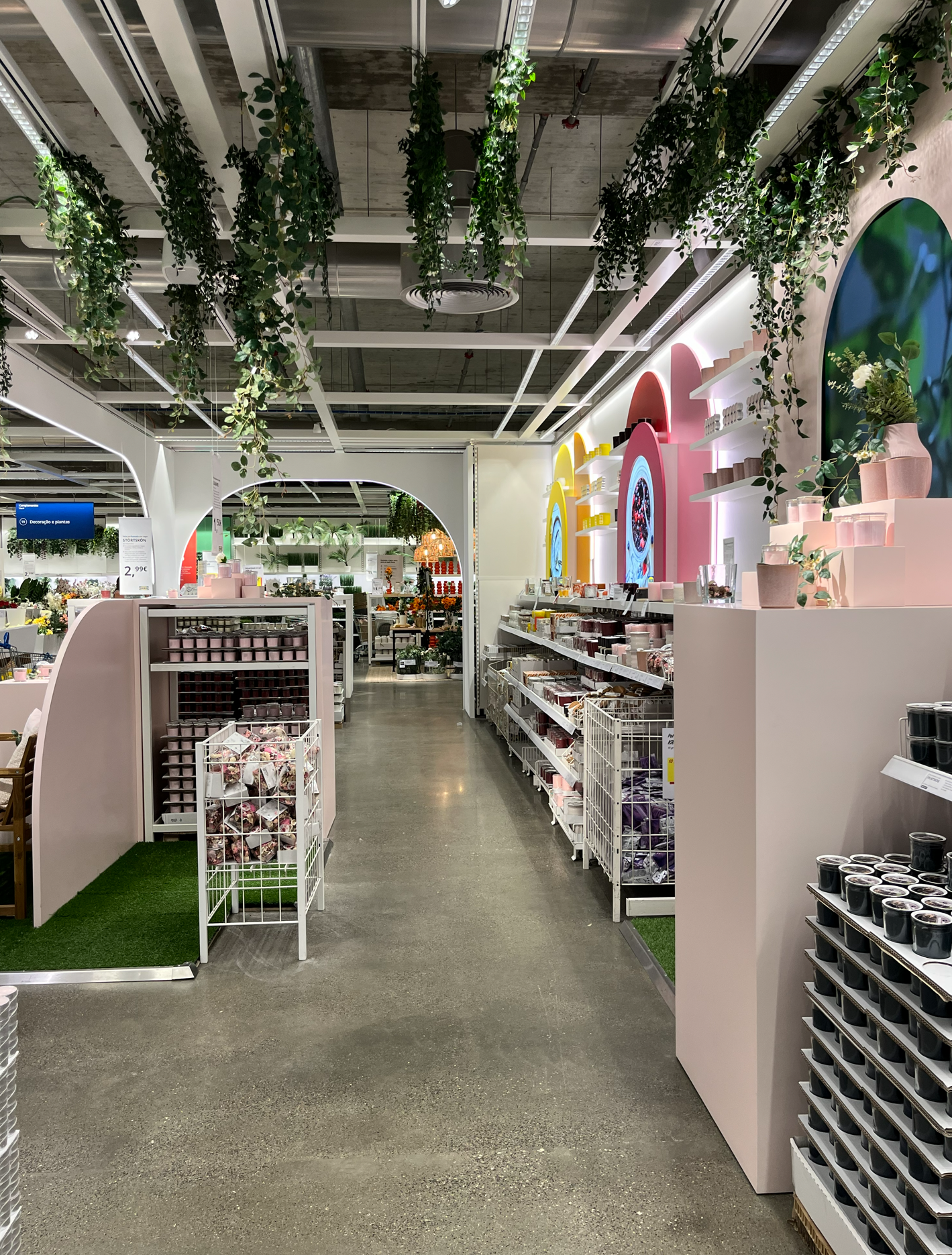
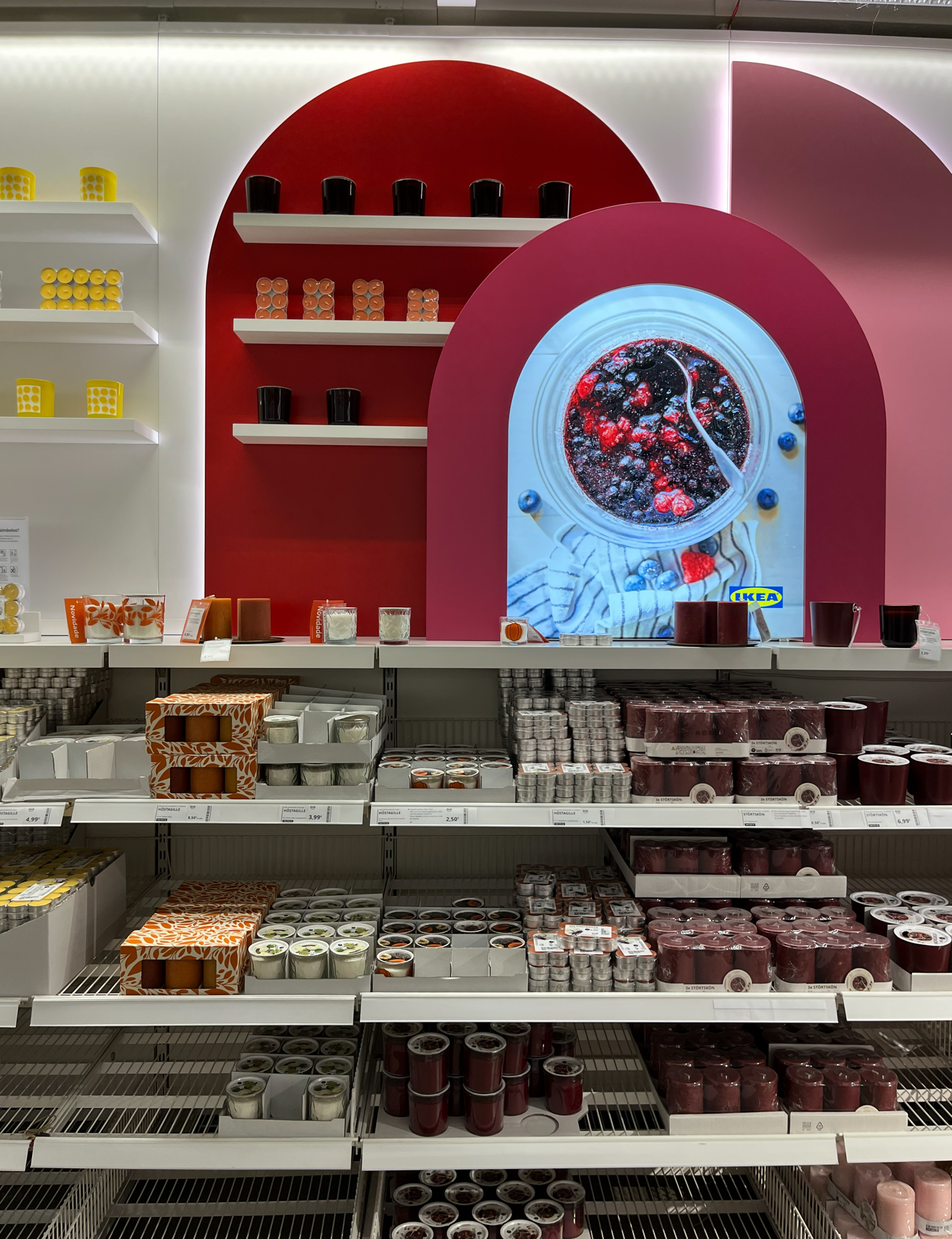
The candle category was clearly separated from the surrounding section through illuminated arches that created an immediate threshold.
This architectural framing established the candle category as its own experiential world, without disconnecting it from the larger store environment.
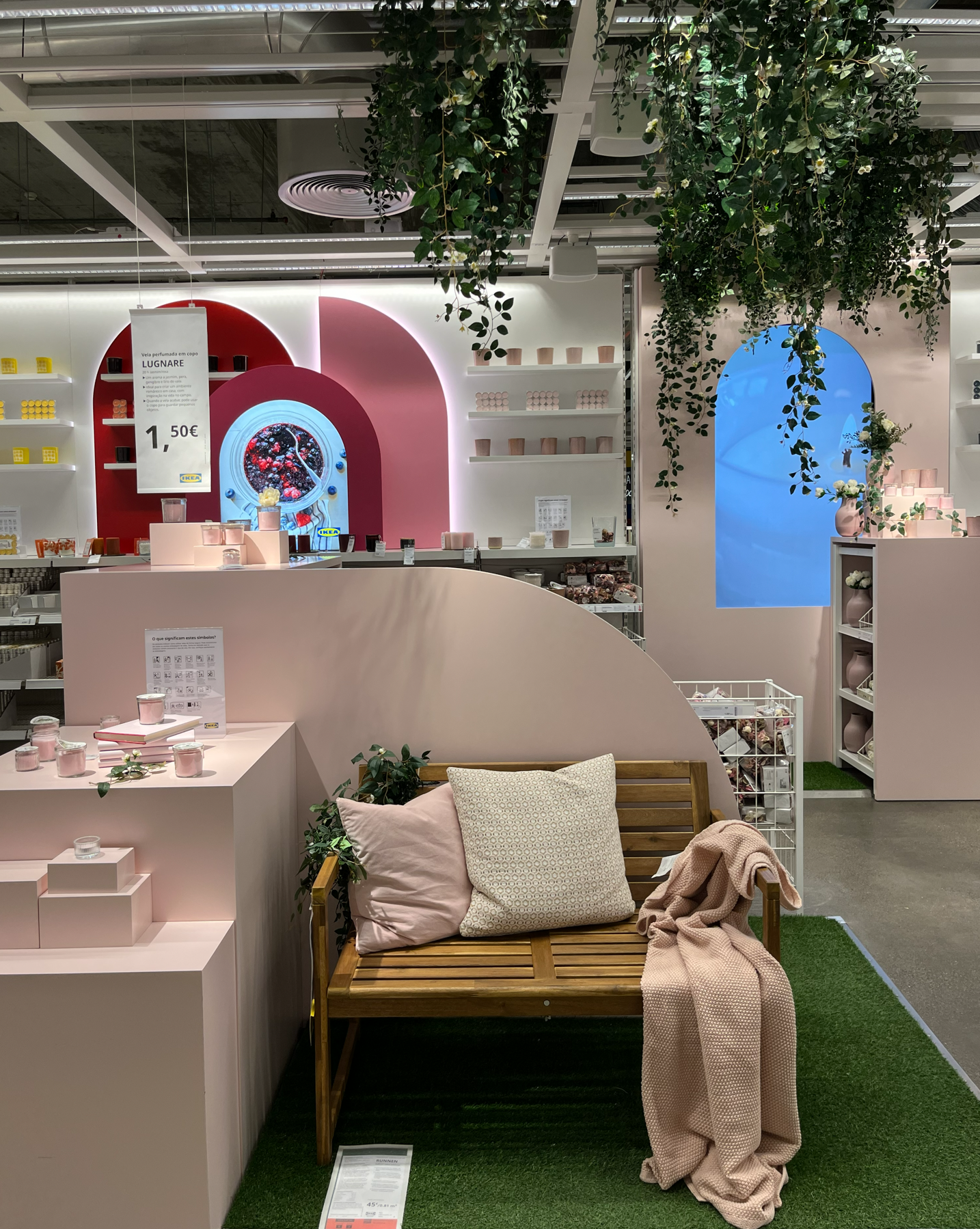
The atmosphere balanced the warmth of a sunroom with the delicacy of a florist.
Candles were not presented as commodities. They were positioned as mood, ritual, gifting, atmosphere, and lifestyle.
This is where strong grouping begins: before the product itself, the customer first understands the emotional territory of the category.
The Focal Point Strategy: Navigation Through Visual Rhythm
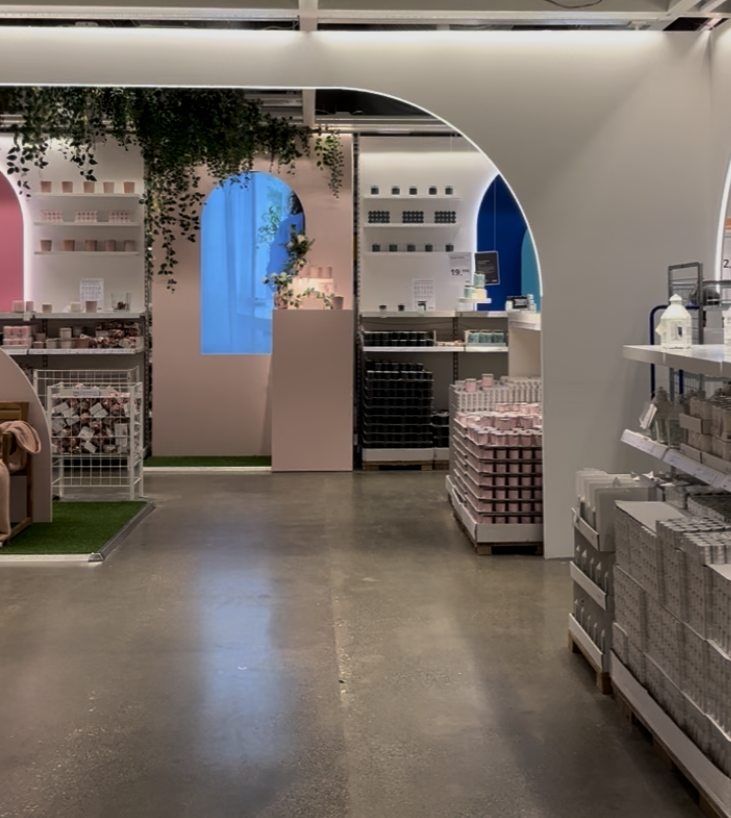
The focal point hierarchy was particularly intelligent.
The first frontal focal point was a video installation, immediately pulling the eye forward and anchoring the category entrance.
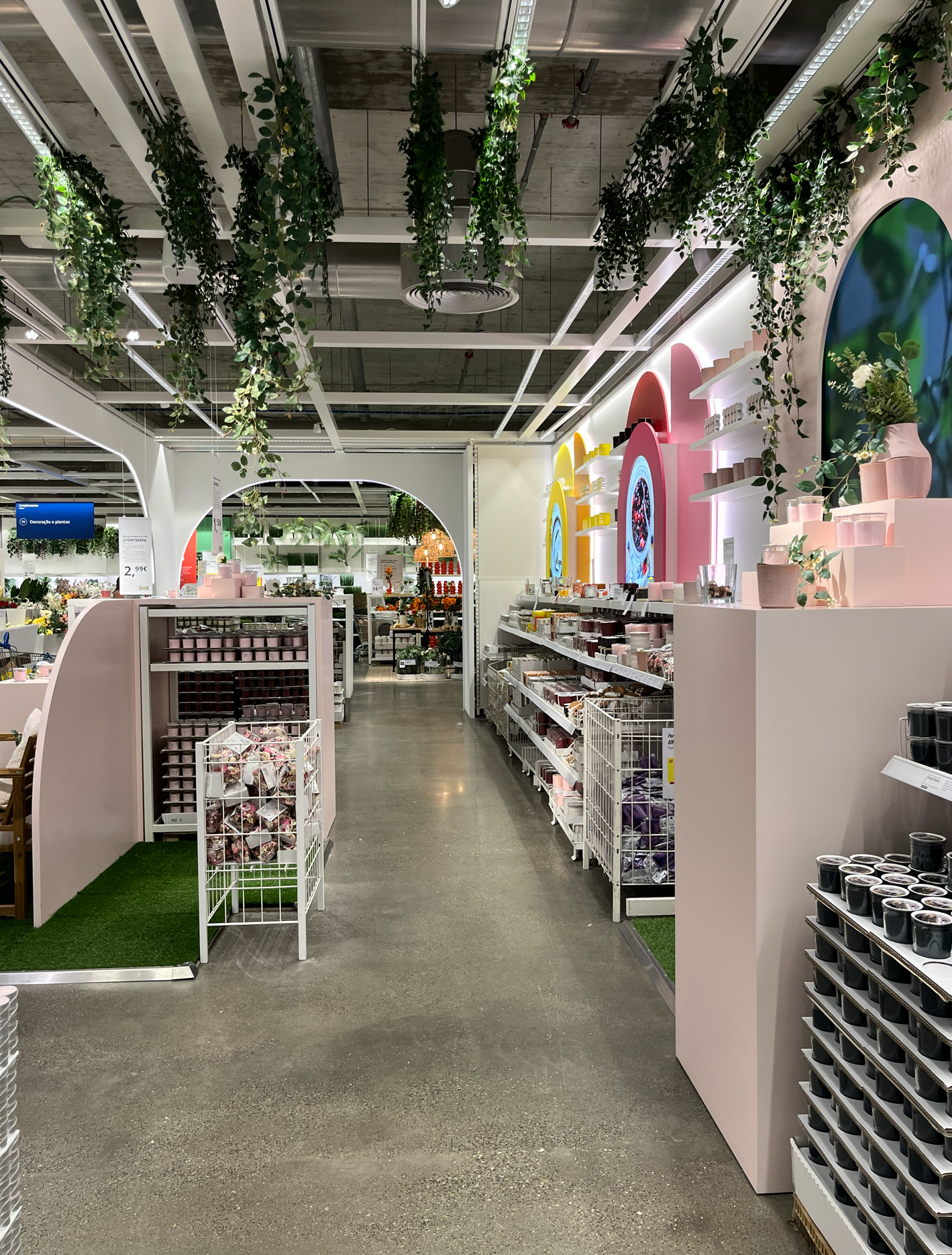
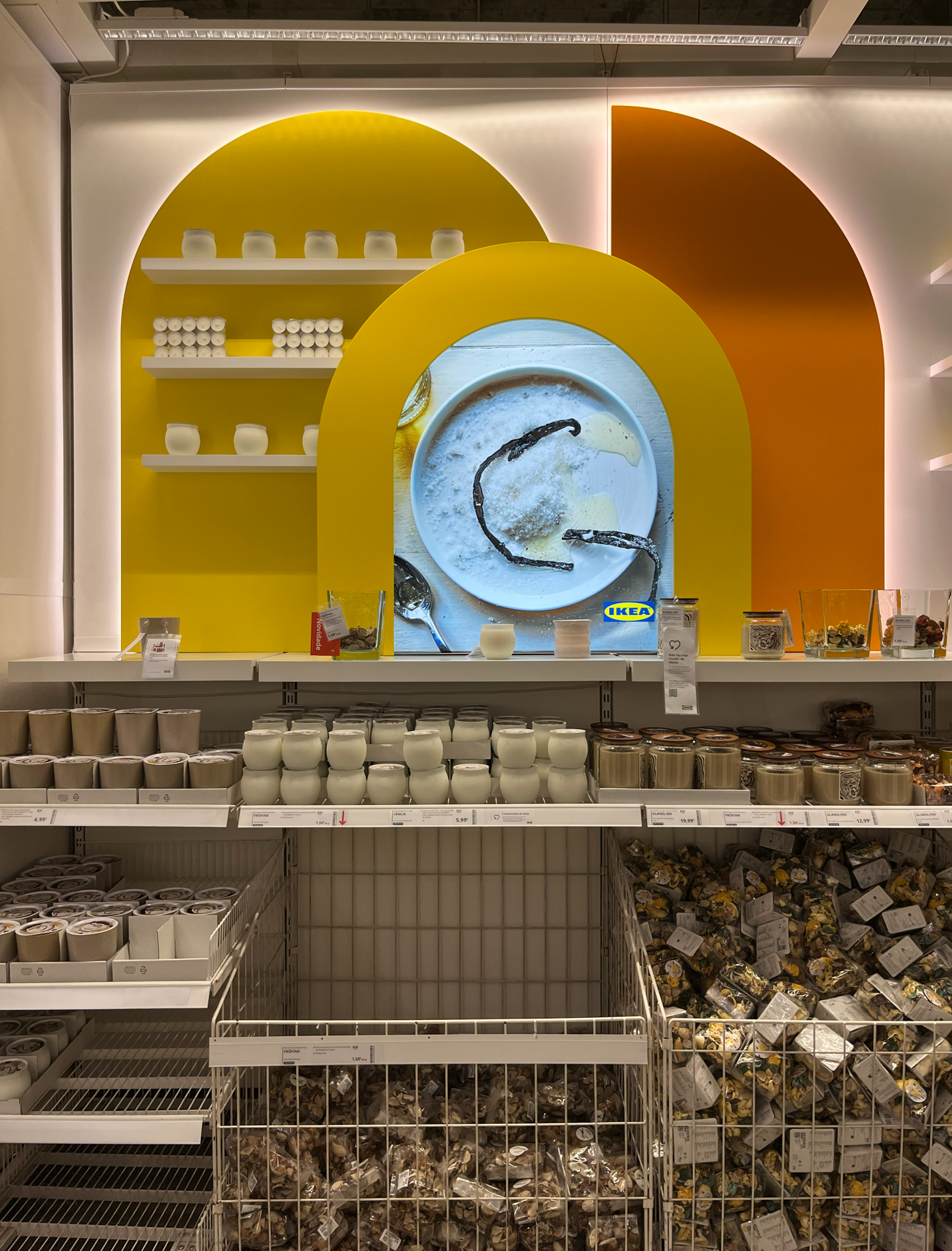
From there, every secondary aisle ended with a repeated visual structure: graphic beauty shots aligned with specific scents, each translated through a temperature-led colour palette.
The framework remained constant, while the imagery and tonal atmosphere evolved.
This repetition created visual rhythm, allowing customers to intuitively understand the logic of the space while staying curious about what came next.
The Power of the Immersive
One of the most memorable spatial decisions was the use of a colder, less visible area for a immersive and Instagrammable activation.
Here, IKEA introduced a “bathe in aroma” concept through shower-like installation: one in warm yellow for vanilla and another in blue representing freshly washed laundry.
Both were scented. And people could step full in and smell the scents evolved in those colors wich worked perfectly.
This transformed a cold area into memory-making space.
The customer journey moved from rational comparison into embodied sensory storytelling, and reinforce the segmentation into experience design.
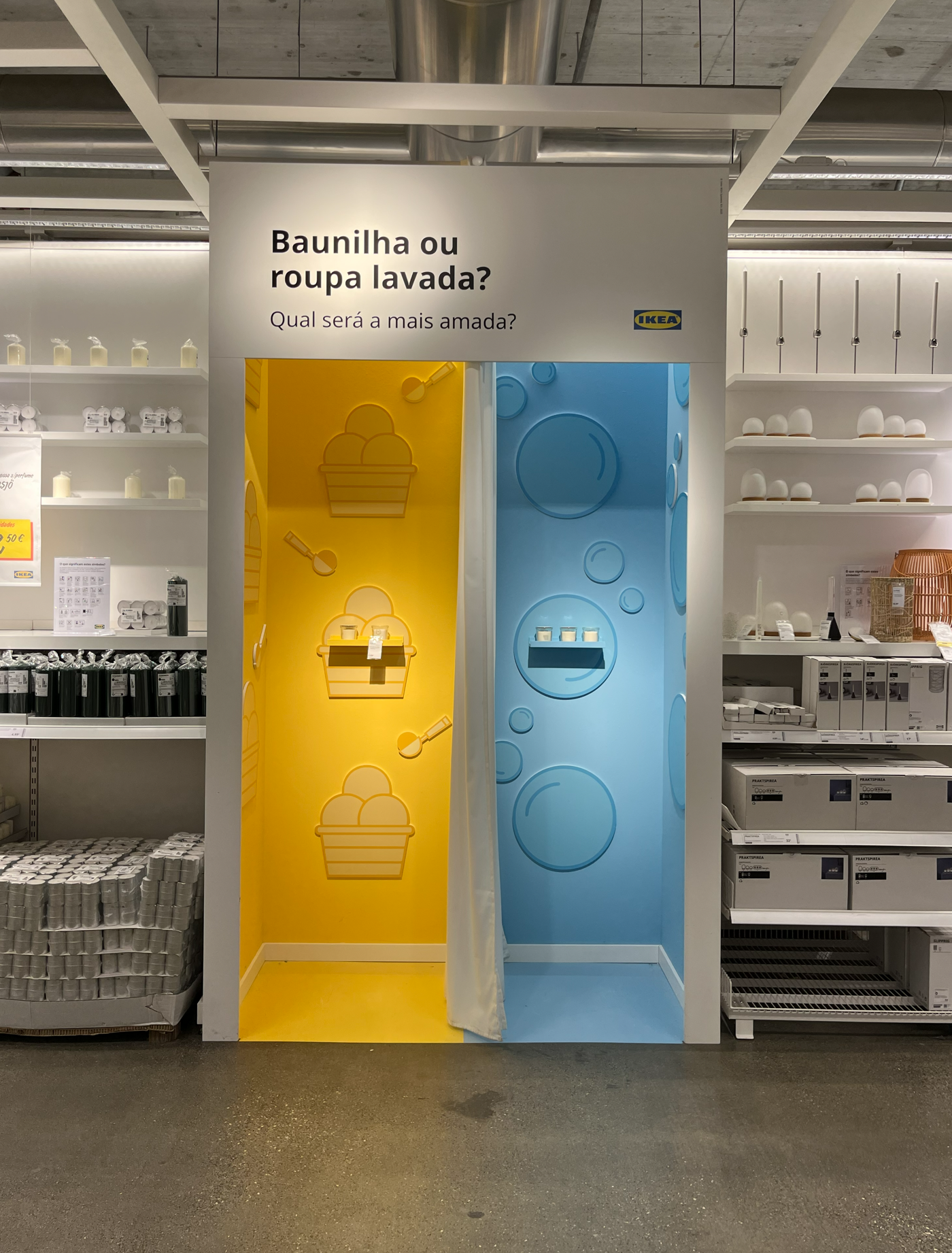
TRANSLATION: Vanilla or Freshly Wash Laundry? / Which one is the most loved?
The Micro Level: Grouping Logic and Customer Decision
The segmentation followed a clear hierarchy:
First by scent, then by colour, and only then by size.
This suggests the primary customer entry point is emotional and aesthetic:
How do I want the room to feel?
Which colour story fits my home?
Which scent atmosphere am I drawn to?
And in this specific product, I bet theres a lot of “favorites” amongst IKEA Costumers.
Only after this, comes size.
This is highly effective when the customer’s first decision is mood-led.
If the main decision driver were more functional, such as candle holders fit, burn duration or scale, a size-first grouping might reduce friction.
The key lesson is simple: the best grouping logic reflects the customer’s first decision question, the trigger.
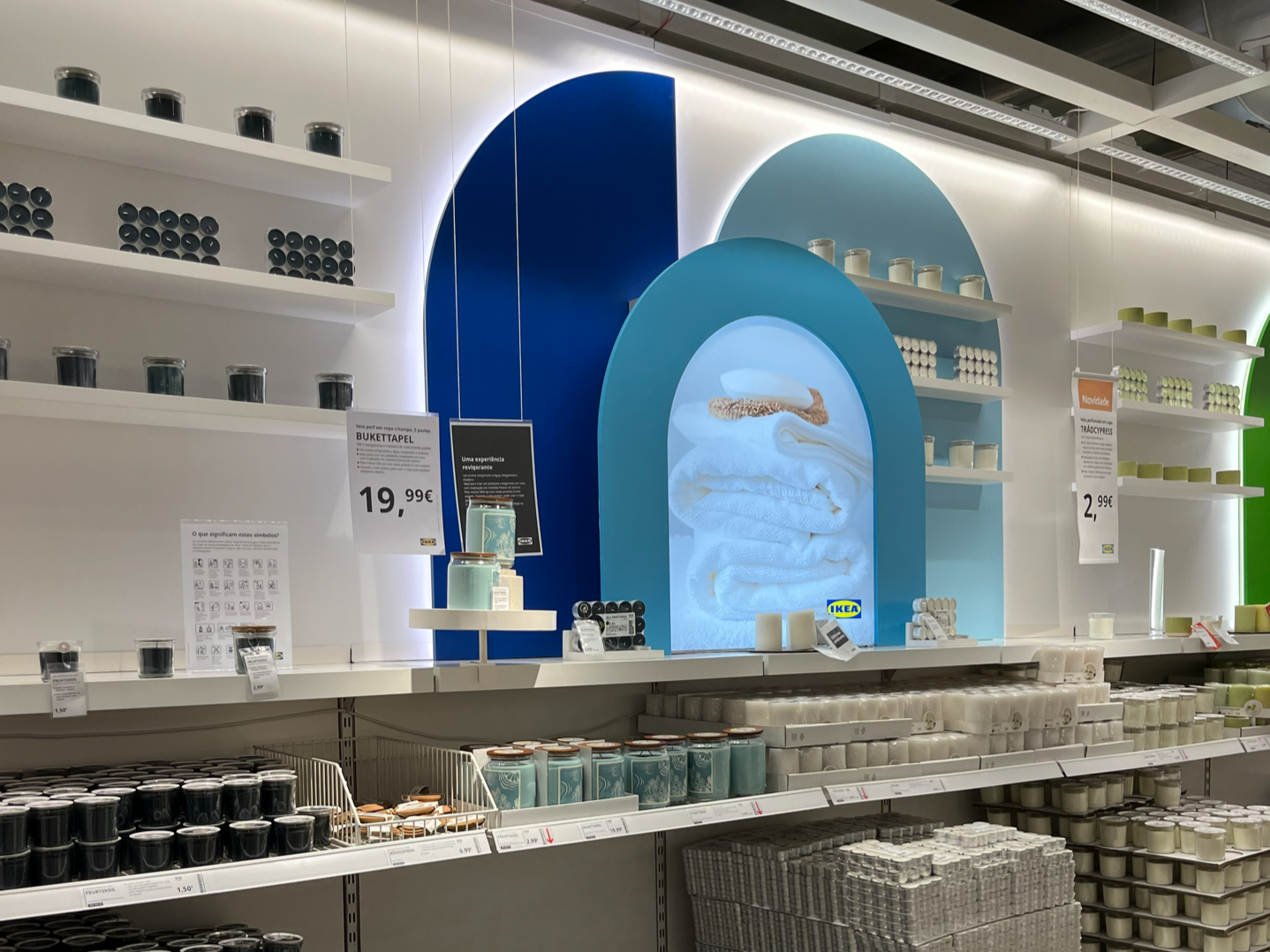
Mathematical Display Systems and the Role of Dominance
The display execution followed IKEA’s recognisable mathematical merchandising structure.
Wall communication acted as dominance: large-scale inspirational and informational anchors that guided the customer’s eye across the space and quickly defined the purpose of each zone.
At display level, the logic remained equally strong:
* tester product and pricing at accessible height
* stock directly below
* packaged grab-and-go units ready for immediate purchase
Simple and replicable.
Progressive Value Perception Through Spatial Navigation
A particularly smart decision was the price ladder built into the grouping.
Within each color and scent family, the most accessible price point sat closest to the main aisles, while premium options were placed into the wall.
This creates progressive value discovery.
The customer first enters through low-risk, then naturally upgrades once emotionally connected to the scent or color.
The physical journey mirrors the psychological one: interest, familiarity, comparison, upsell.
What This Teaches Us About Great Product Grouping
What makes this IKEA example so powerful is that the grouping itself is mechanically simple.
A clear segmentation strategy built around favourite scent profiles, color affinity, focal point rhythm, and progressive offer depth creates a space that feels intuitive, and immersive.
The alignment between aisle endings, dominance walls, sensory storytelling, and price progression transforms a standard candle display into a complete retail narrative.
This is what excellent product grouping does.
It organises choice.
It guides movement.
It creates emotion.
And most importantly, it helps customers understand the offer in the same sequence that their mind naturally makes decisions.
Because in great retail, grouping and allocation is never just about where products go. It is about the customer.
If you aren't already one of our students, This topic is covered in depth in the Store Design & Merchandising course - including practical assignments. Explore the course →
At STEER Academy, we teach visual merchandising as a strategic discipline that connects customer psychology, store layout, and commercial performance.
If you want to learn how to design spaces that guide decision-making, build emotional connection, and increase conversion, explore our online Visual Merchandising and Retail Design courses.
Execution-focused: installing displays, maintaining standards, supporting senior team members. This is where you learn the reality gap between what the instructions say and what the store actually allows. People who move through this level quickly treat it as intelligence-gathering, absorbing how retail works, building execution speed, and beginning to develop an informed point of view.
→ Explore the Courses at steer.academy
This casestudy was written by Diana Paiva, founder and lead instructor at STEER Academy
