
Christmas Visual Merchandising: How to Design a Holiday Store That Sells
For most retailers, the last quarter of the year is the year. The weeks between November and January can decide whether the year was good or not. And yet, walk through most stores in December and you will see the same thing: decoration piled on top of products, baubles, garlands, a wash of red and green and gold, as if the season were something you add, rather than something you design.
A Christmas display is not just decoration. It is part of a commercial plan, happening at the busiest and highest-stakes moment of the retail calendar.

So the job is the same one for every other month, only now the volume is turned all the way up.
Here is how to design one that sells.
Start with the commercial goal, not the theme
The first decision is not "what will it look like." It is "what does this display have to do." Maybe it is to sell in quantity. Maybe it is to sell the higher-margin products. Maybe to sell through a hero product or a specific line. To lift the average ticket through add-ons or cross-selling. Or even to carry a brand-pillar narrative that strengthens positioning or top-of-mind (TOM).
Before a single ornament, you have to name the job. Every strong seasonal strategy answers one primary commercial goal, and everything visual serves it.
A display that tries to do everything says nothing. The theme, the colour, the story, the materials, they all come after the goal setting.
The window does the first selling
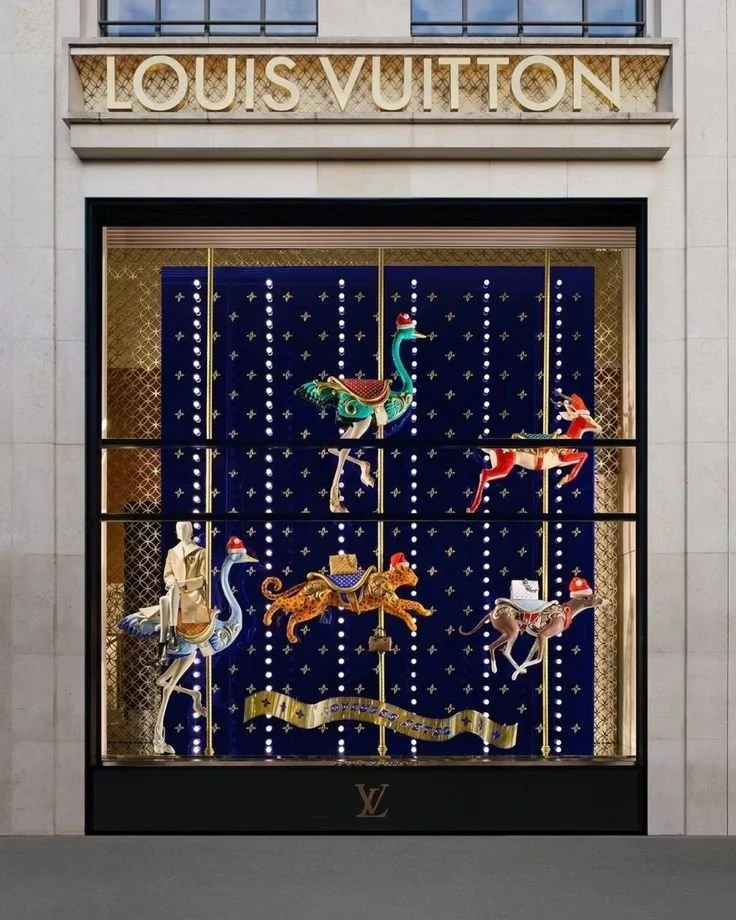
At Christmas, the windows are more valuable and effective than at any other time of the year. Because they are working on people who are not only in an inspiration mindset but already in a buying frame of mind, many of them shopping for someone else and short of ideas. That is not a moment to be decorative. It is a moment to be clear and give them a reason to come in and shop.
That means a single focal-point composition beats a crowded scene, even though at this time of year retailers want to put everything in the storefront. So be mindful of that. People want an answer, not more questions.
If they are standing in front of your window, they have already run out of the brainstorming phase. They want resolution, and it has to be clear and simple.
And this is the part people forget: most of the sales still happens in the store. Studies show that even in the peak holiday quarter, roughly four in five retail dollars are still spent in physical stores. The window and the floor are still doing the heavy lifting.
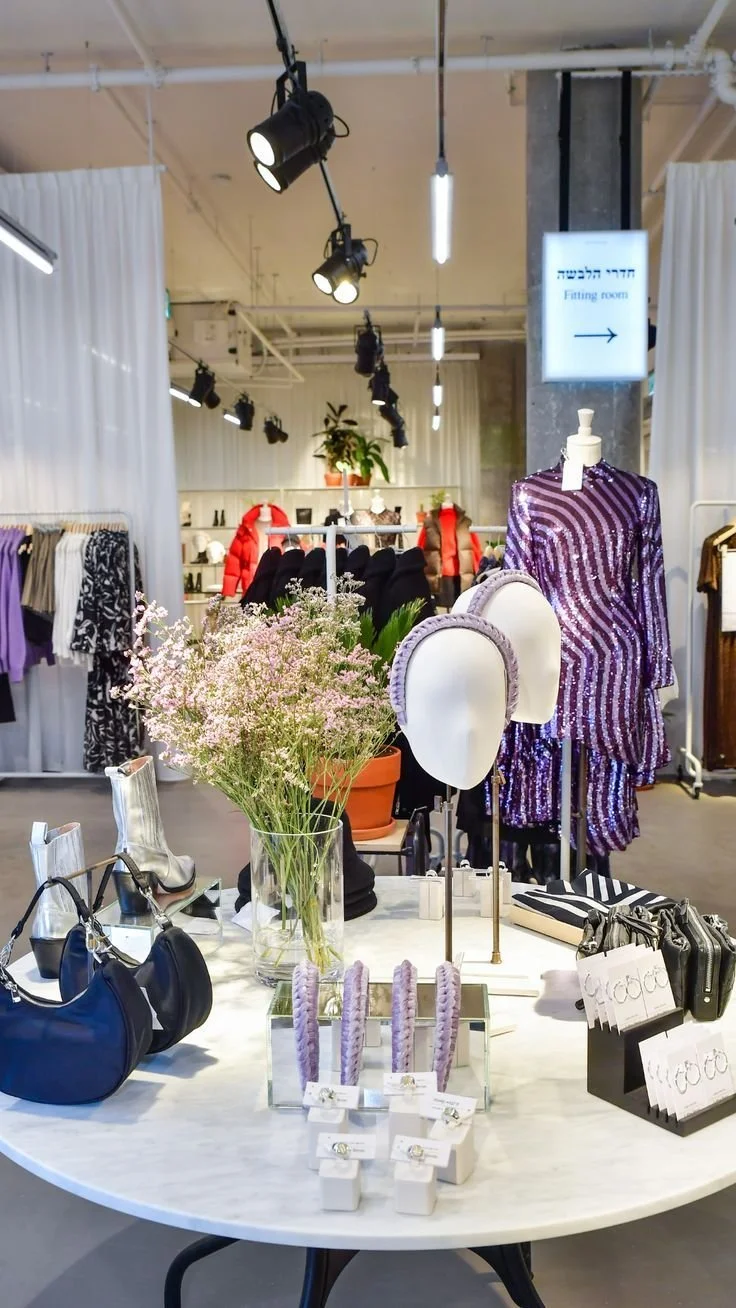
Guide the gift journey
The Christmas shopper is on a mission, and it is usually not for themselves.
They are buying for other people, often under time pressure, frequently unsure what to choose. The store that makes that journey easy, wins.
This is where seasonal merchandising shines: gift zones grouped by decision triggers (like colour, packaging, size) or price, so an undecided shopper can navigate by "who" and "how much" instead of by category or collection.
Use cross-selling proposals that complete the idea: the complementary product, the special wrapping beside the gift.
And when you choose the product to pair with the hero, consider an impulse price point, in the brand's first price quartile.
Because every decision should carry the least possible friction.
Amplify the brand, don't bury it
The easiest mistake in December is to reach for the generic: the same visual codes like red and gold, the same tinsel, applied over every store until they are all the same. It photographs as "Christmas," and it erases the brand.
The best alternative is to express the season through the brand's own language, its palette, its materials, its story, so the display reads unmistakably as this brand at Christmas, not as Christmas in general.
Every seasonal decision, from the choice of materials to how products are composed, should still be transmitting the values and pillars of the brand. The season is an opportunity to say who you are more clearly, not a licence to disappear into someone else's aesthetic and have the illusion that this will give you broader sales.
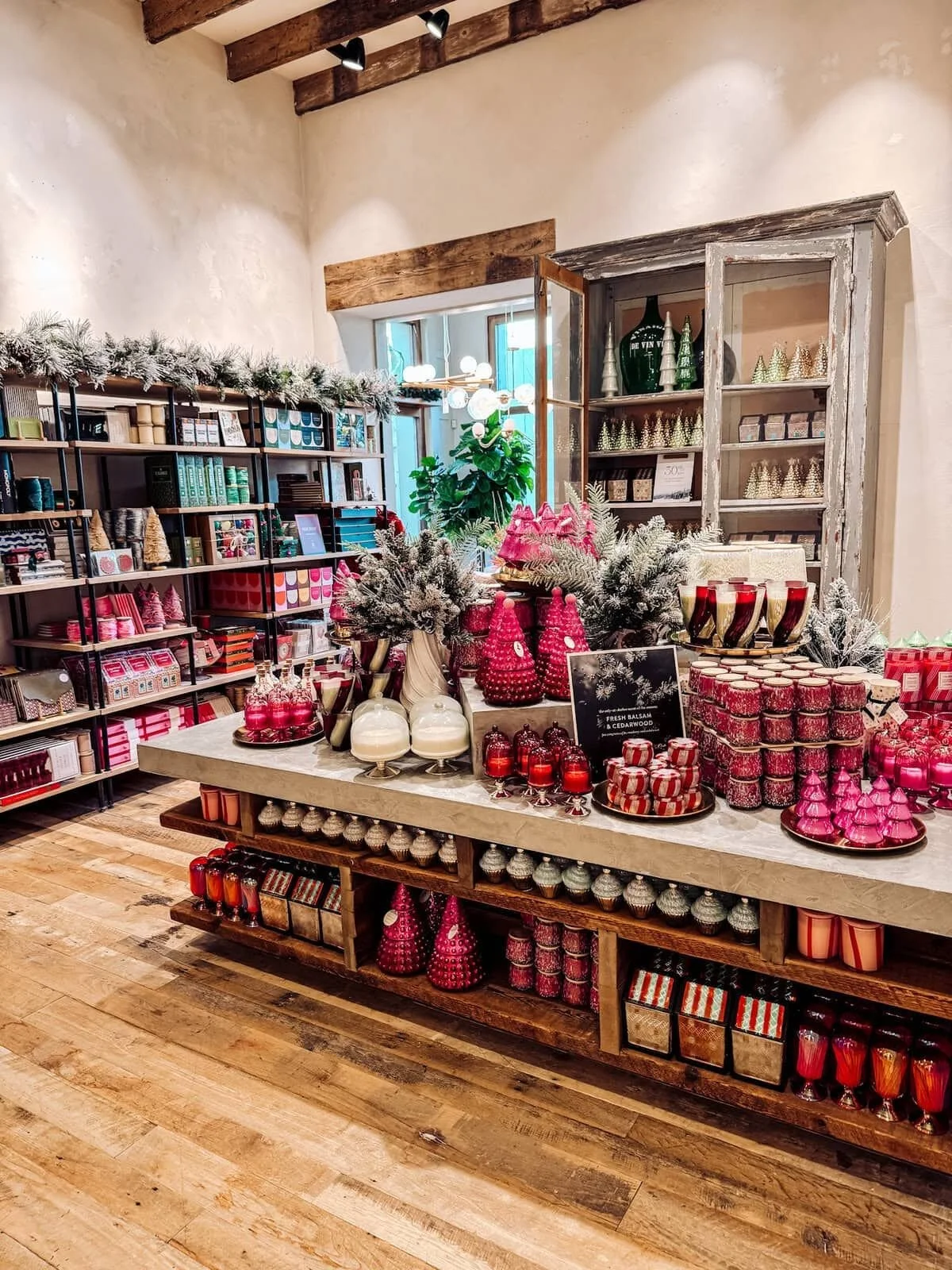
Plan for the operational reality
A holiday display and product allocation that looks beautiful on installation day and collapses by mid-December is a failure, no matter how beautiful.
The season's real test is operational: high traffic disturbs displays faster, hero products sell through and need restocking without breaking the composition, and the support logistics at its peak decide whether the visual strategy holds.
This is the invisible half of the work. A display is designed not only to look right on day one, but to keep working through six weeks of the heaviest foot traffic of the year.
Build the maintenance logic into the design from the start, or the season will dismantle it for you.
The season is the year's biggest test of the discipline and technique
Christmas is where visual merchandising is under the most pressure and matters the most. It is the quarter that carries the whole year, executed at the highest speed, in front of the largest audience. Don't do it as decoration, or it will be noise. Do it as strategy, around a commercial goal, brand, journey and operations, and it becomes the most productive display work a store does all year.
At STEER, that is the difference we teach: the thinking process that turns a seasonal display from visually impactful and beautifully inspiring into a commercial plan the brand can be proud of.
Frequently asked questions
When should you start planning a Christmas retail display?
Earlier than you think. If you are lucky enough to work for a brand that closes the offer and shares it with the other departments at least six months ahead of production, you should start the creative process and planning around August. Even with small tweaks at the end of September, this gives you October for a month of production and one or two weeks in November for implementation. But the heavy work, the meetings, budgets, approvals and rollout plans, is all done smoothly in September. The most important thing is that the concept and rollout plans are locked before the peak logistics start.
How do you create a seasonal display that fits your brand?
Express the season through the brand's stylistic identity, its own palette, materials and story, instead of applying a generic Christmas template. Every seasonal decision should still communicate the brand's identity and values, so the display reads as this specific brand's atmosphere. Here is a starting point: think of the brand as a person. Is that person feeling cheerful or nostalgic this Christmas? Is it hosting the whole family, or travelling for a new tradition? Is it matching pyjamas or high-end festivities? Phone-free games night, or an Instagrammable photo booth? Don't make it about the decor. Make it about the message people relate to.
